Composer Niloufar Nourbakhsh joined the American Composers Orchestra last month as a mentor for the EarShot Readings alongside composers Marcos Balter, andCurtis Stewart.
June 13, 2024
Neidorff-Karpati Hall, Manhattan School of Music, New York City, NY
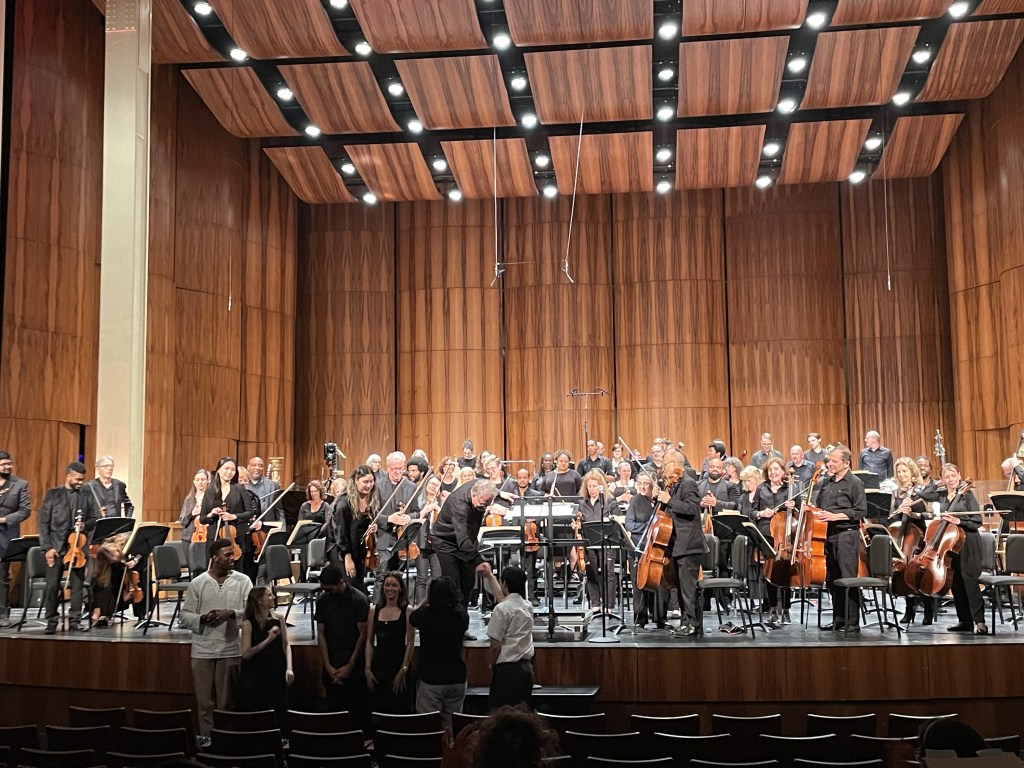
American Composers Orchestra, Conductor: Delta David Gier
C Ce See commissioned by Cheswatyr Foundation and Composers Now
performed by the International Contemporary Ensemble: Ross Karre (percussion), Josh Modney (violin), Hannah Levinson (viola), Michael Nicolas (cello), Erika Dohi (piano), Kyle Motl (bass), Isabel Gleicher (flute), Steve Schick (conductor) C Ce See by Niloufar Nourbakhsh (2022) https://iceorg.org/
video edited by Alex Huddleston
this work was selected in the Spring 2023 #FollowMyScore call for works
We are thrilled to announce that composer Niloufar Nourbakhsh has signed with Oxingale Music Publishing. All future works and selected pieces from her catalogue are now published by Oxingale. This relationship was firstly developed with the publication of “Cyclical Rabbits” as part of the Primavera Project collection.
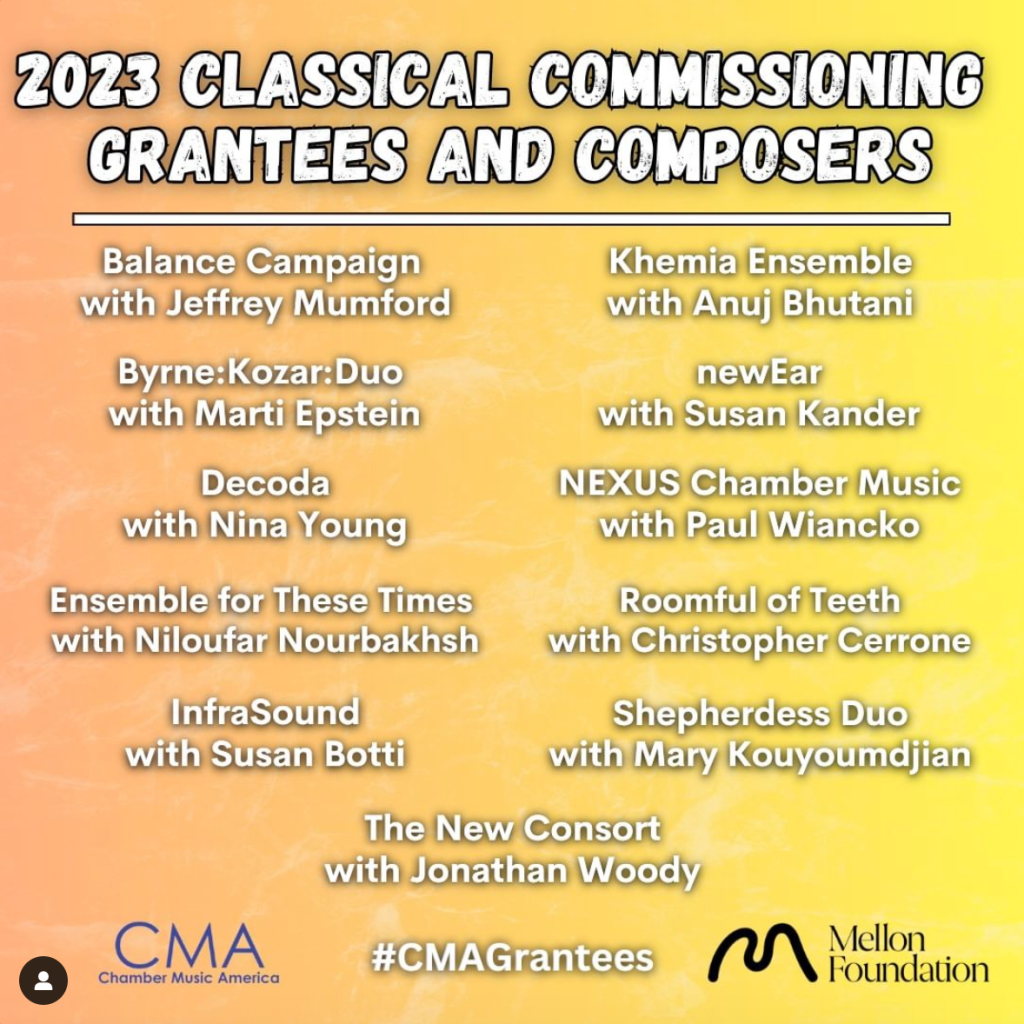
Chamber Music America has announced CMA Classical Commissioning Grant Recipients for 2023. Niloufar will work with filmmaker Pegah Pasalar on a new multimedia piano trio for “Ensemble for These Times” on the subject of Immigration, the sweet and the sad, and all other emotions and consequences that come with Immigration.
Niloufar Nourbakhsh in Conversation with Shaghayegh Bagheri, Samin Ghorbani, and Golnar Shahyar; published as part of Musik & Ästhetik journal’s forum. Read the article HERE
A feminist revolution sparked in Iran after the death of Mahsa Jina Amini on September 16, 2022. Iranian people marched across the streets of Iran and the world under the unified words of “woman, life, freedom”, demanding justice for the murder of Mahsa while she was in custody of “Morality Police” for improper hijab. Veiling became obligatory for all women in Iran above the age of nine, two years after the 1979 Islamic Revolution. Alongside this gender apartheid ruling, women were also prohibited from singing in public after the revolution. A verdict that banished many of Iran’s celebrated female singers to silence or exile . For the first time in our contemporary history, the focus and attention of the world has landed on compulsory hijab, but I believe it is equally important to speak about the compulsory veiling of women’s voices at this crucial historical time as well. Therefore, I set out to interview three distinguished Iranian female singers of our time to speak their truths: Shaghayegh Bagheri, Samin Ghorbani, and Golnar Shahyar.
Next month marks the official centennial of the birth of Chou Wen-Chung, who left us only four years ago. Along with his remarkable but woefully underrecognized oeuvre, his legacy extends to his influence on several generations of Chinese composers and performers he mentored over a long, productive career. Many of them, like Chou Wen-Chung, settled in the U.S., where they have explored innovative ways of synthesizing various aspects of Chinese culture with currents in contemporary Western music.
Framing this morning’s focus on that legacy is music representing two generations of Iranian artists. We begin with Niloufar Nourbakhsh, a young composer and pianist born in Karaj and now based in the U.S. A founding member of the Iranian Female Composers Association, she wrote Veiled in response to the Iranian protests in 2017. Nourbakhsh points to the anger she carries within as a result of “growing up in a country that actively veils women’s presence through compulsory hijab or banning solo female singers from pursuing a professional career.” The cello’s eloquence, pitched high in the register, mixes with an electronically processed track of a woman singing, transforming her anger “into a collective force that is both beautiful and resilient.” She describes Veiled as a “tribute to the Iranian women who made such transformations possible.”
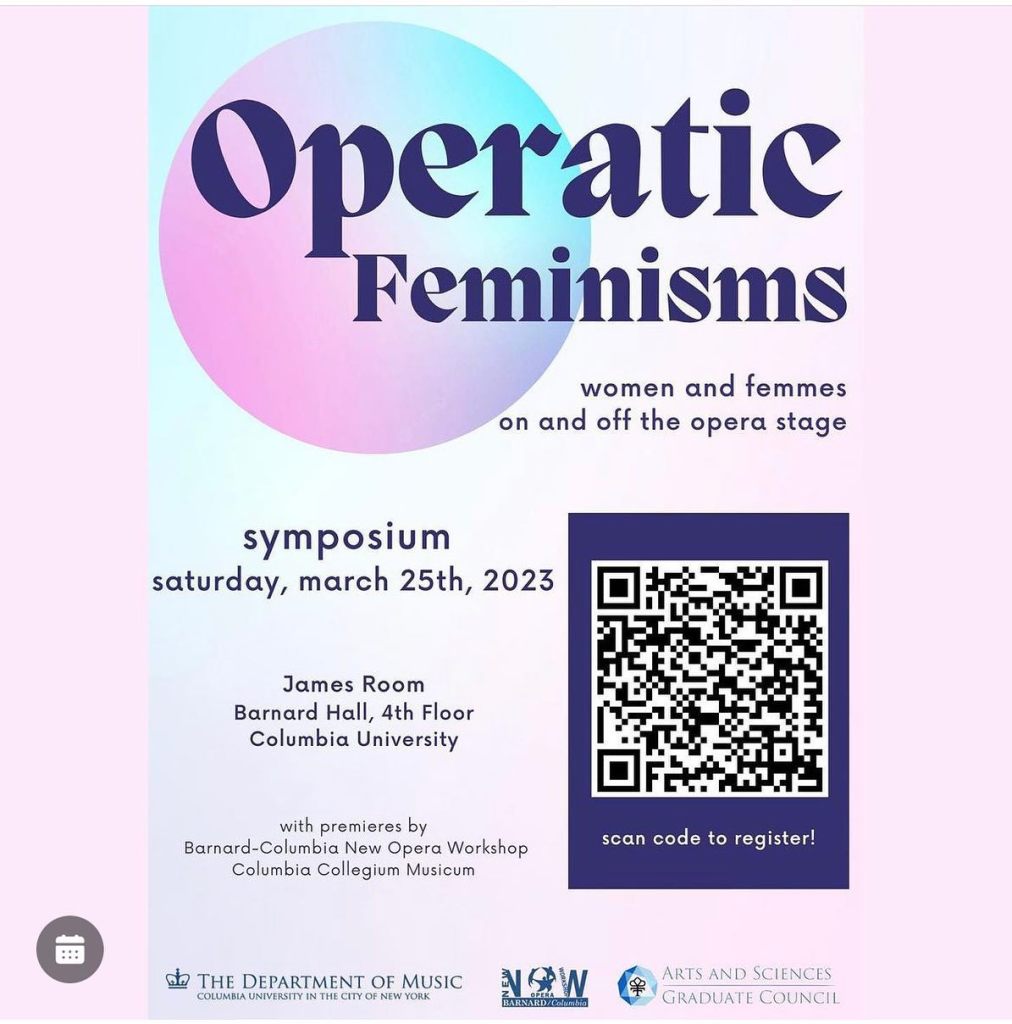
Operatic Feminism:An event that bridges the worlds of scholarship, performance, and criticism to think through the possibilities for feminist opera studies and women in opera in the twenty-first century
Niloufar Nourbakhsh: “I want to share about Seattle Opera’s ‘A Thousand Splendid Suns’ by composer Sheila Silver and libretto by Stephen Kitsakos, based on the book by Khaled Hosseini, and how for this world premiere at Seattle Opera, they did something very unique.
“They took a risk by deciding to work with a stage director, Roya Sadat, who had never staged an opera in her life. I think this is significant, and I hope more producers and opera companies can feel empowered to take these risks where they can bring in people who are not necessarily in opera but who are wonderful artists with a vision. Roya Sadat has done an amazing job, and I want to see more risks taken like this.”
Niloufar Nourbakhsh speaks on BBC Newsday on the 100th day of Woman Life Freedom Revolution that started after the murder of Mahsa Zhina Amini while in custody of the Islamic Regime’s Morality Police. Listen to the full segment HERE
ALL ARTS from PBS has published their segment on opera “We the innumerable” that was co-presented by Center for Contemporary Opera and National Sawdust with support from 2019 Opera America Discovery Grant.




 Nilou Nour | Composer Pianist
You must be logged in to post a comment.